Hyperbaric oxygen – an effective tool to treat radiation morbidity in prostate cancer
Auteur(s)
Ramona Mayer, Huberta Klemen, Franz Quehenberger, Oliver Sankin, Elisabeth Mayer, Arnulf Hackl, Freyja-Maria Smolle-Juettner
Jaartal
2001
Tijdschrift
Radiotherapy and Oncology 61 (2001) 151–156
Type publicatie
Onderzoek
Onderzoek
Cohort analyse
Aantal
18
Selectiecriteria
Radiatieproctitis, radiatiecystitis en radiatieproctitis/cystitis
Methode
Between June 1995 and March 2000, 18 men (median age 71 years) with radiation proctitis (n ¼ 7), cystitis
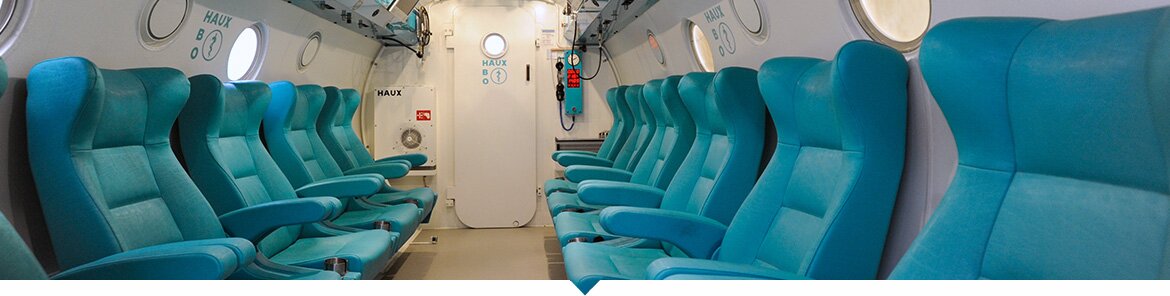
(n ¼ 8), and combined proctitis/cystitis (n ¼ 3) underwent HBO therapy in a multiplace chamber for a median of 26 sessions (range 2–60).
The treatment schedule (2.2–2.4 atmospheres absolute, 60 min bottom time, once-a-day, 7 days a week) was set at a lower limit of 20
sessions; the upper limit was left open to symptom-related adjustment. Prior to HBO treatment, RTOG/EORTC late genitourinal (GU)
morbidity was Grade 2 (n ¼ 3), Grade 3 (n ¼ 6) or Grade 4 (n ¼ 2); modified RTOG/EORTC late gastrointestinal (GI) morbidity was either
Grade 2 (n ¼ 4) or Grade 3 (n ¼ 6).
(n ¼ 8), and combined proctitis/cystitis (n ¼ 3) underwent HBO therapy in a multiplace chamber for a median of 26 sessions (range 2–60).
The treatment schedule (2.2–2.4 atmospheres absolute, 60 min bottom time, once-a-day, 7 days a week) was set at a lower limit of 20
sessions; the upper limit was left open to symptom-related adjustment. Prior to HBO treatment, RTOG/EORTC late genitourinal (GU)
morbidity was Grade 2 (n ¼ 3), Grade 3 (n ¼ 6) or Grade 4 (n ¼ 2); modified RTOG/EORTC late gastrointestinal (GI) morbidity was either
Grade 2 (n ¼ 4) or Grade 3 (n ¼ 6).
Resultaat
Sixteen patients underwent an adequate number of sessions. RTOG/EORTC late GU as well as modified GI morbidity scores
showed a significant improvement after HBO (GI, P ¼ 0:004; GU, P ¼ 0:004; exact Wilcoxon signed rank test); bleeding ceased in five out
of five patients with proctitis and in six out of eight patients with cystitis; one of those two patients, in whom an ineffective treatment outcome
was obtained, went on to have a cystectomy.
showed a significant improvement after HBO (GI, P ¼ 0:004; GU, P ¼ 0:004; exact Wilcoxon signed rank test); bleeding ceased in five out
of five patients with proctitis and in six out of eight patients with cystitis; one of those two patients, in whom an ineffective treatment outcome
was obtained, went on to have a cystectomy.
Conclusie
HBO treatment seems to be an effective tool to treat those patients with late GI and GU morbidity when conventional
treatment has led to unsatisfactory results. Particularly in patients with radiation cystitis, HBO should not be delayed too long, as in the case
of extensive bladder shrinkage improvement is hard to achieve.
treatment has led to unsatisfactory results. Particularly in patients with radiation cystitis, HBO should not be delayed too long, as in the case
of extensive bladder shrinkage improvement is hard to achieve.
Externe link
Indicatie
LRTI blaas


